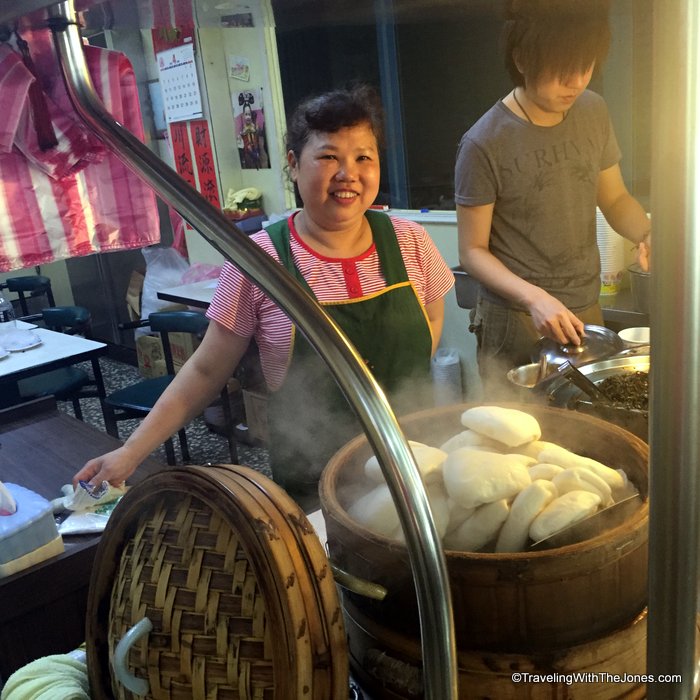
 When we are visiting a city and want to get a taste of the local food and culture, we always try to book a food tour. There’s no better way, we’ve found, to get introduced to local foods such as the gua bao (a Taiwanese burger) being prepared in a local rather than tourist restaurant.
During our visit to Taiwan earlier this year, we booked the Taipei Eats Xinyi food tour. This food and cultural walking tour explores Taipei’s Xinyi District, known for massive shopping malls and Taipei 101. On the Taipei Eats Tour, however, we explored the parts of this district frequented by locals as we ate our way through a wide variety of foods.
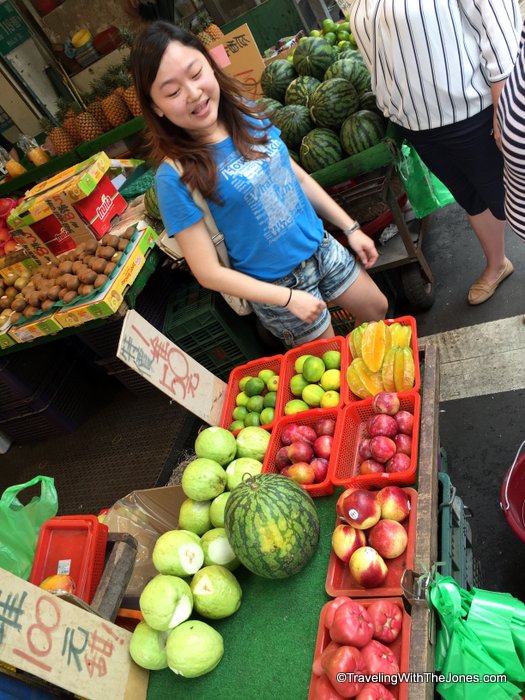 Quincy, pictured above, was our friendly and knowledgeable guide for the Taipei Eats Food Tour. Soon after meeting her, our small group walked to a local neighborhood wet market.
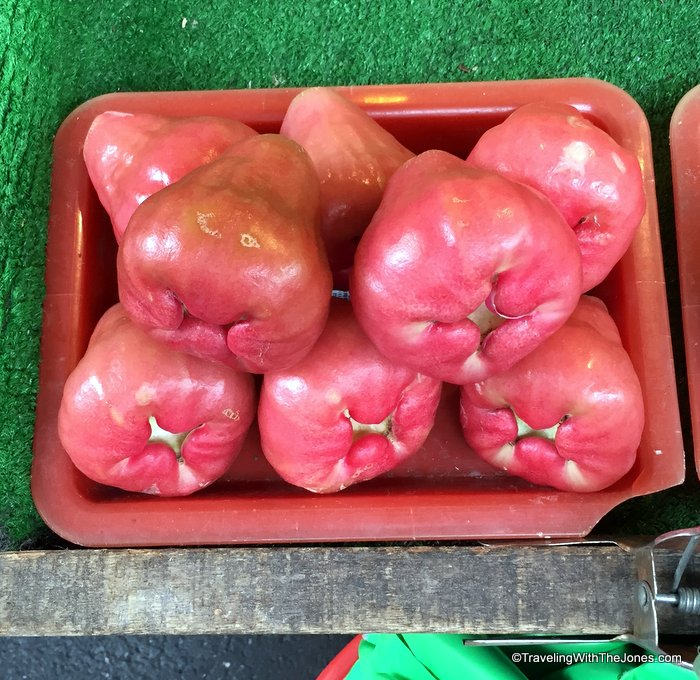 One of the first things that Quincy has us try was a fresh wax apple, an unusal but delicious fruit that we sampled at the market. The wax apple might not be the most beautiful fruit, but we agreed that it was one of the best-tasting “apples” we’ve ever enjoyed.
Street markets in Taipei are amazingly clean and odor-free.
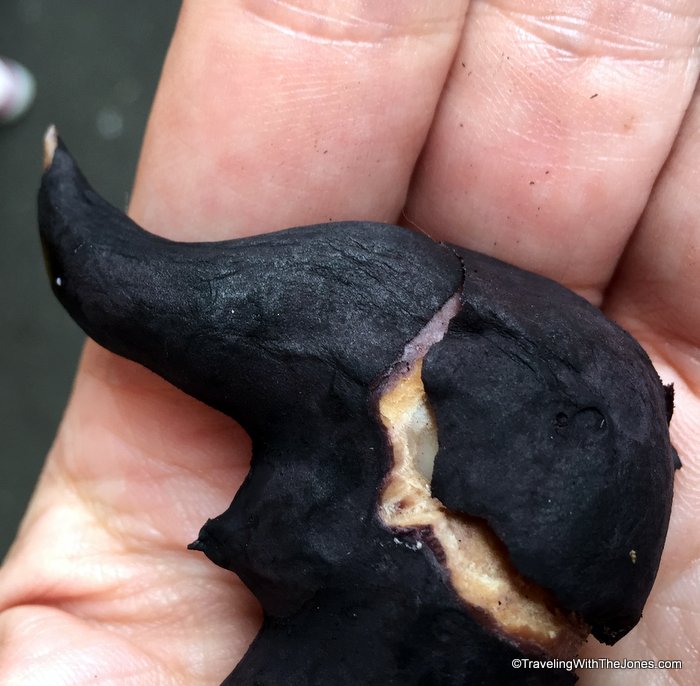 Our next sample at the market was a roasted water caltrop (water chestnut). The water caltrop is an aquatic plant native to warm climates in Asia and Africa that produces ornately shaped fruits resembling a flying bat. Each fruit contains a single very large, starchy seed that is eaten after the outside is roasted.
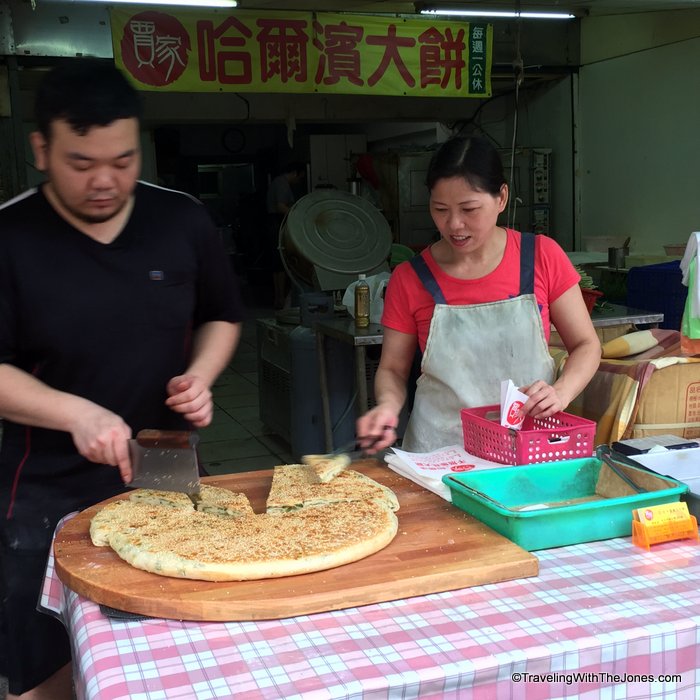 As we continued walking through the market stalls, we stopped at this stand, which specializes in a product called “Thousand layer big bread.” It is made of layer after layer of pastry sprinkled with green onion and butter, topped with sesame seeds, and baked in a hot oven.
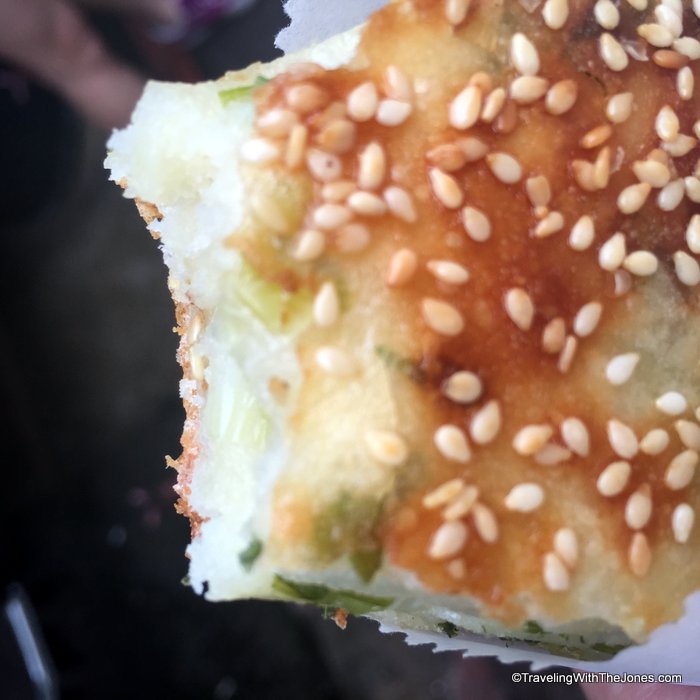 We each had a slice of this delight. If we lived in Taipei, we would frequent this food stall often.
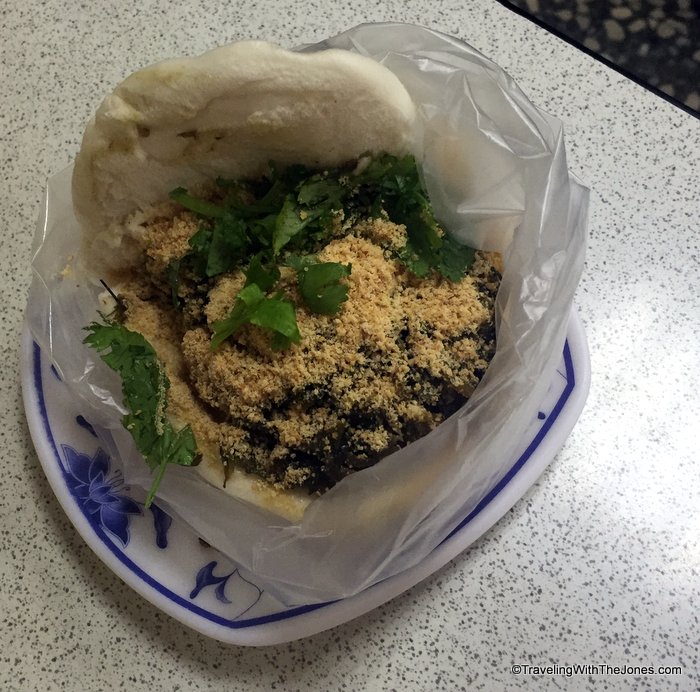 Heading out of the market, our next stop was at a small restaurant famous for its Gua bao, which is considered a Taiwanese burger. Gua bao is made with simmered pork belly stuffed into a special bread that’s topped with ground peanuts and fresh cilantro. It’s yummy, and something we would have never discovered on our own.
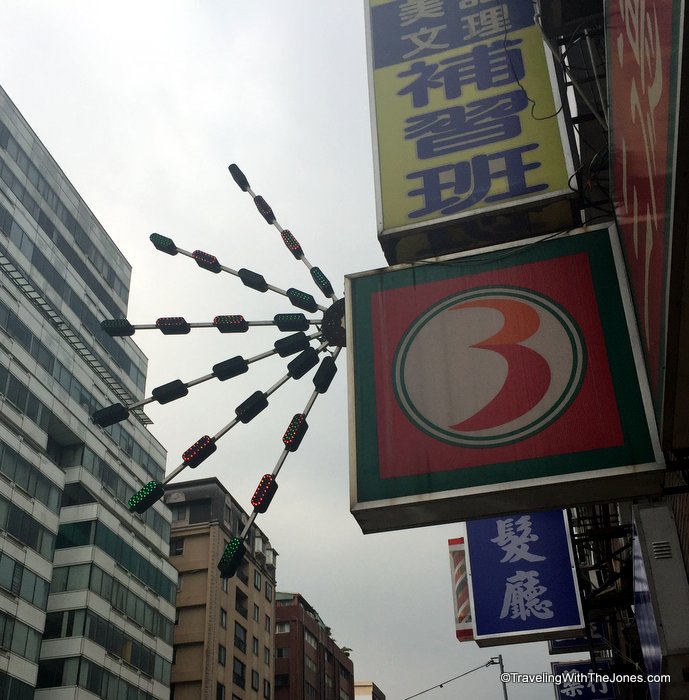 Throughout Taipei (and all of Taiwan) there are spikey signs like the one pictured above. They are lit at night in a flashing red and green, and they signify that the location sells beetle nuts, a stimulant that locals chew.
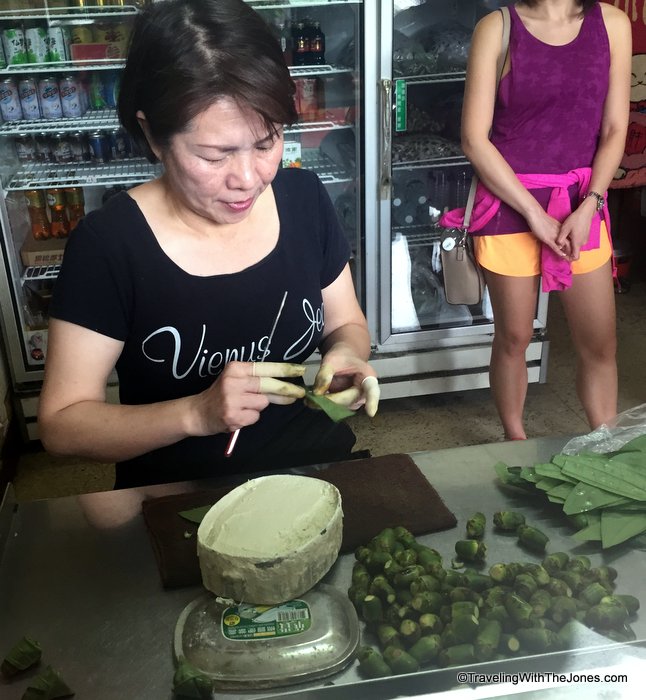 We watched this woman make beetle nuts, a labor-intensive process.
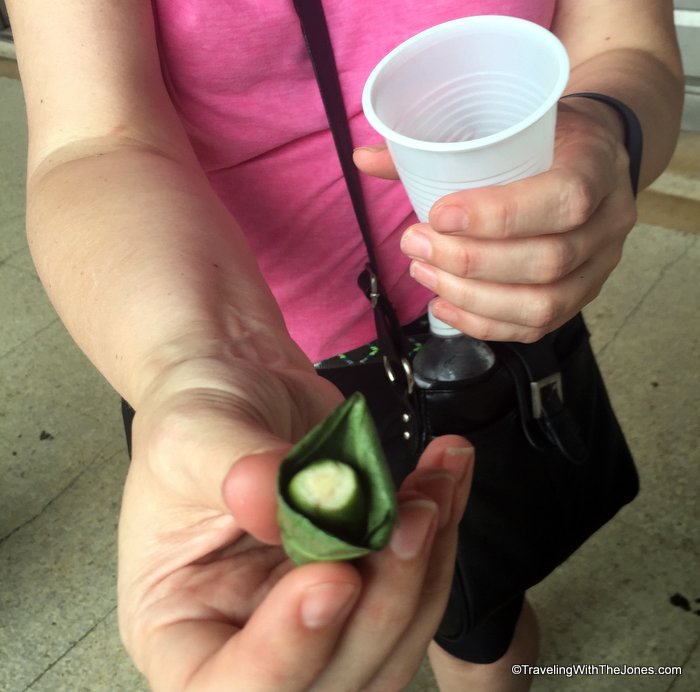 Then we were each offered a beetle nut to try, along with a spit cup.
I’m almost always up for trying anything, but after one quick “chew” I spit the beetle nut quickly. Coffee, tea, chocolate — all better choices for a “stimulant” in my opinion.
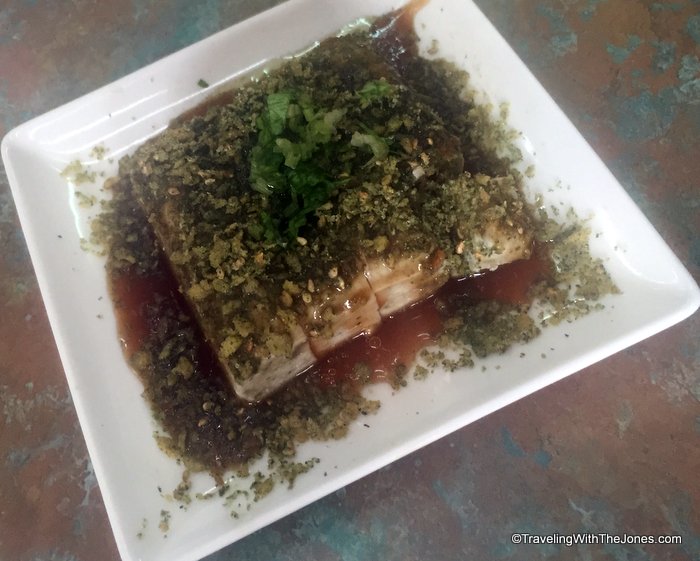 Next we tried another local favorite dish that I’d never try without encouragement — raw, stinky tofu. It was not as bad as I expected, and I enjoyed the raw version over the fried stinky tofu.
Now that I tried it, I won’t need to order it as a night market.
Mr. Jones passed on trying both the beetle nut and the stinky tofu. Quincy, our guide, would explain each food and how to eat it, but did not pressure you to eat anything you didn’t want to try.
 Next, we walked to another restaurant for more appetizing food. The cold noodles pictured above were delicious. We also tried miso eggdrop soup with meatballs.
Luckily, the walk was a little longer to the next stop at the Songshan Cultural Park, were we tried milk tea, pinapple cake and German pudding (which is like an egg custard.) The baked goods were from Wu Pao Chun bakery, which I’d highly recommend.
Also we had the chance to sit down and try to two favorite dishes at the Kao Chi restaurant, the biggest local rival to the internationally-known Din Tai Fung.
NOTE: On previous trips to Singapore, we discovered the xialongbao (soup dumplings) at Din Tai Fung, and returned repeatedly to enjoy them. The fact that Din Tai Fung was founded in Taipei was one of the determining factors in choosing to visit Taiwan.
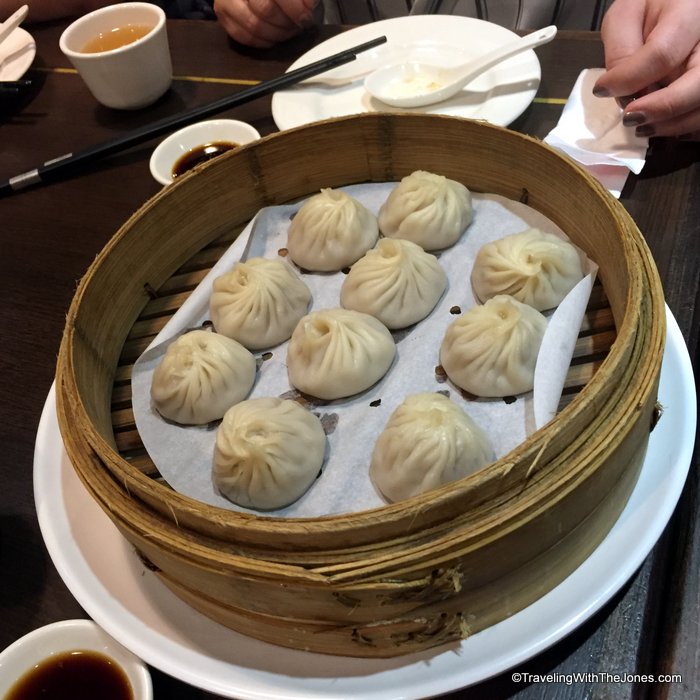
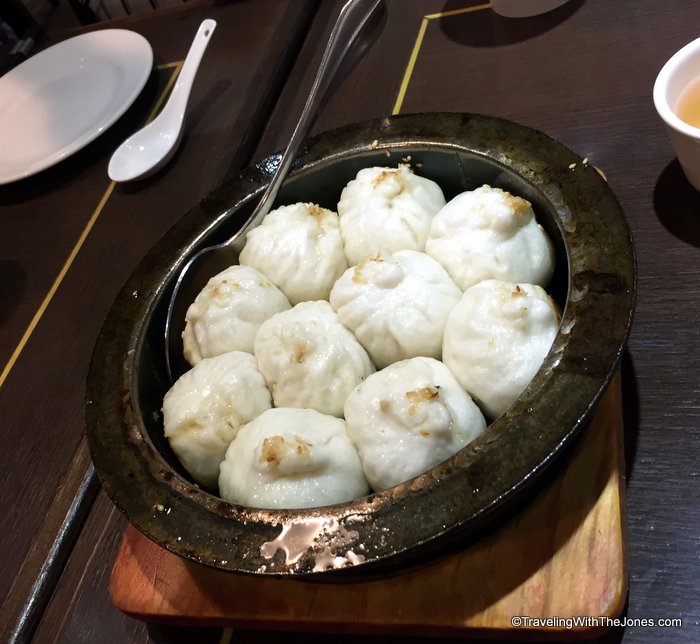 At Kao Chi, our food walking tour got to relax as we sat a group table and were served xialongbao (steamed soup dumplings) as well as the panfried dumplings which have more of a bread-like dough. Our tour group was in agreement — both types of dumplings were delicious, and there were no leftovers at this stop.
More walking ensued, as did more food stops. Although this tour was spread out over 4 hours, all of the prior food stops were adding up. If you take this tour, be sure to pace yourself.
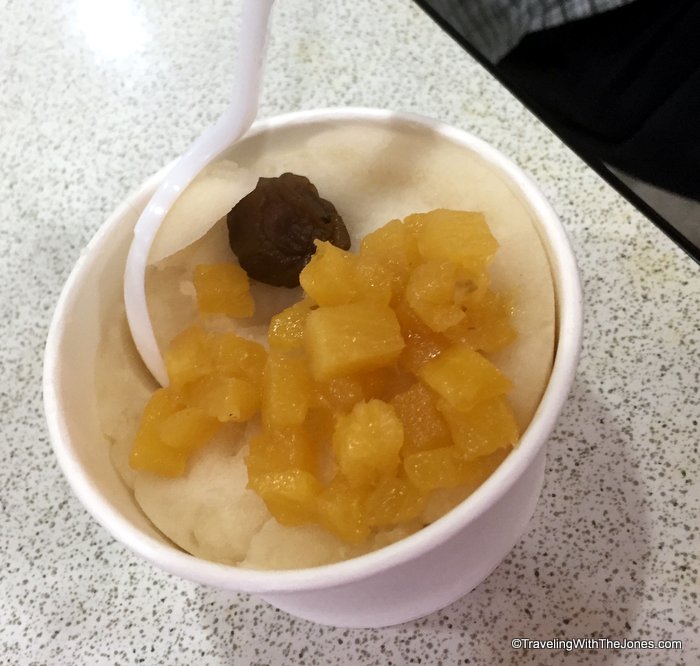 Our last stop was for dessert. I chose this local sorbet flavored with pineapple and preserved plums.
If you visit Taipei, we highly recommend the Taipei Eats Food Tour, which costs $70 US per person. Try to book the tour early in your visit, to take advantage of all of the food advice and dining recommendations that you are given on the tour, and via a post-tour email.
Have you visited Taipei? What’s your favorite local food?
Please share your thought in comments below, or by interacting with us on Twitter, Facebook, Pinterest or Instagram.
Other posts on our visit to Taipei:
- A Ferris Wheel on Top of a Shopping Center in Taipei, Taiwan
- Visiting the Raohe Street Night Market in Taipei, Taiwan
- Riding the Maokong Gondola in Taipei, Taiwan
- A Cheers Bar in Taipei, Taiwan
- 18 Fun Facts About Taipei 101
- A Peek Inside Suite 829 at the Taipei Marriott Hotel
- A Look Around the Taipei Marriott Hotel in Taiwan