
1. The Canary Islands — an archipelago of seven main islands and six islets located off the west coast of Africa — are a part of Spain.
2. During the Middle Ages, the Canaries were explored by the Phoenicians, the Greeks, and the Carthaginians but it was the Romans who named the islands: Nivaria (Tenerife), Canaria (Gran Canaria), Pluvialia (Lanzarote), Ombrion (La Palma), Planasia (Fuerteventura), Iunonia (El Hierro) and Capraria (La Gomera).
3. Tenerife is the largest and most populous island of the Canaries. Fuerteventura is the second largest Canary Island by area, while Gran Canaria has the second highest population.
4. When the Europeans began to explore the Canaries during the Middle Ages, they encountered indigenous people. Known as Guanches, the Berber-related aboriginal inhabitants of the Canary Islands are thought to have migrated to the archipelago around 1000 BC or earlier.

5. While the yellow-green bird with brown streaking on its back is native to the Canary Islands, the islands’ name is not related to the bird.

6. The name Islas Canarias thought to come from the Latin name Canariae Insulae, meaning “Islands of the Dogs.” This name was applied to the islands because they had “vast multitudes of large dogs”. These so-called “dogs” may have been a species of seals as “sea dog” was a Latin term for “seal.” Or, the Canaries dog-association might be from the islands original inhabitants’ practice of worshiping dogs.

7. Before the arrival of humans, the Canary Islands were home to now-extinct species of giant lizards and giant rats. The Gallotia giant lizard species is thought to have reached three feet in length.
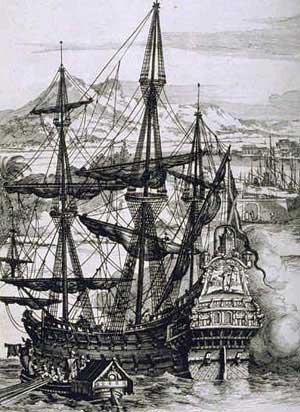
8. During the time of the Spanish Empire, the Canaries were the main stopover for Spanish galleons on their way to the Americas. These large ships, powered only by wind, sailed south to catch the prevailing northeasterly trade winds to carry them to the Americas from Europe.

9. Many European countries tried to claim the Canary Islands. On July 25, 1797, a British fleet under the command of Horatio Nelson attacked Santa Cruz de Tenerife. The British lost nearly 400 men and Nelson lost his right arm in the losing battle.
10. Due to economic struggles on the islands in the early 18th century, Canarians begin immigrating to Spanish-American territories such as Havana (Cuba), Hatillo (Puerto Rice), Veracruz and Santo Domingo (Mexico) and San Antonio, Texas. Today some of San Antonio’s oldest families trace their descent from the Canary Island colonists.

11. Canarian cuisine often includes mojo (pronounced mO-ho), a sauce made with oil, garlic, vinegar, salt, red pepper, thyme, oregano and coriander. Rojo is a red sauce often served with meat, while verde is a green sauce frequently used with fish. Spicy red mojo is called mojo picón. This recipe is the base of the mojos found in Cuba, Puerto Rico, and Venezuela, due to immigrant populations from the Canary Islands.
12. While the Canary Islands have approximately 2.1 million residents, as many as 9 – 10 million visitors arrive each year, drawn by the warm climate, beaches and nature. Tourism leads the economy, making up 32 percent of the of the Canaries’ GDP.

13. Four of Spain’s thirteen national parks are located in the Canary Islands. Teide National Park on Tenerife is home to Spain’s highest mountain and the world’s third largest volcano. Teide is Spain’s most-visited National Park.

14. The Canary Islands offer some unique sports:
- lucha canaria – wrestling with opponents standing in the middle of a sand circle called a “terrero” try to throw each other to the ground. The object is to make one’s opponent touch the sand with any part of their body, except the feet.
- juego del palo – a martial art/folk sport of stick-fighting that involves each participant using 4 to 6 ft. long stick to attack and defend against their opponent.
- salto del pastor – called “the shepherd’s jump,” this sport uses a long stick to vault over an open area. This sport evolved from Canarian shepherds who used of long wooden pole to transport themselves across ravines and down steep embankments.
15. There is only one Starbucks in all of the Canary Islands. It is located at the Gran Canaria Airport on the island of Gran Canaria. Since the Starbucks here is located inside of airport security, only arriving or departing flight passengers can visit Starbucks in the Canary Islands. The location only carries Starbucks Spain mugs.
Learn more about the Canary Islands with these books:


Have you visited the Canary Islands?
What interesting fact can you add?
Interact with us on Twitter, Facebook, Pinterest or Instagram.
Other recent Fun Facts posts to check out: